
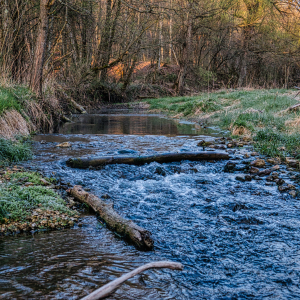
Picture this, there’s a river. Left to itself, a river flows, steadily, naturally, calmly, finding its way around obstacles, carrying life along its course. It's meant to move. But imagine that one day, suddenly and without warning, something large crashes down across its path. A fallen tree, a rockfall, a collapse of the bank. The water, which only moments ago was flowing freely, begins to back up behind the blockage. Pressure builds. And downstream, where the water used to run, everything begins to dry up and struggle.
I'm Rebecca Muller, a BABCP and EMDRUK accredited trauma therapist based in North Berwick, East Lothian, working online with clients across the UK and globally. In nearly thirty years of trauma work, I've come to see that this image of a dammed river captures something profound about what trauma does and about how EMDR therapy helps the natural current of your life begin to move again. If you've been feeling blocked, stuck, or as though your life has stopped flowing the way it used to, this blog is for you.
When Life Stops Flowing
We are, in many ways, meant to flow. Emotions are meant to move through us, felt, expressed, and released. Experiences are meant to be processed and integrated, becoming part of our story before flowing on downstream. This is how we're designed to work, and when everything is flowing as it should, life has a natural momentum to it.
But trauma is like that sudden blockage across the river. When something overwhelming happens, it can dam the natural flow. The emotions that should have moved through us get trapped behind the blockage. The experience that should have been processed and released instead sits there, backing everything up. And just as a dammed river causes problems both upstream and down, unprocessed trauma affects everything: our mood, our sleep, our relationships, our sense of ease in the world. The pressure builds, and the parts of our life that should be flourishing begin, quietly, to struggle. We’ve become stuck from our trauma.
If this resonates with you, please know it isn't a failing on your part. You haven't done anything wrong, and you're not weak for feeling blocked. A river doesn't choose to dam itself, and neither did you. Something fell across your path, and the natural consequence is that the flow got interrupted.
Think of it like this: trauma doesn't mean your river has run dry. It means something is blocking the flow and blockages, unlike droughts, can be gently and safely cleared. And during the cleared flows, new flow routes and ripples arise.
Why You Can't Force The Water Through
When a river is blocked, you can't fix it by simply willing the water to flow harder, and you certainly can't fix it by dynamiting the dam, that would only cause a destructive flood downstream. Anyone who has tried to 'push through' their trauma, or been told to just move on, knows this instinctively. Forcing it doesn't work and can sometimes make things feel worse.
What actually clears a blockage is careful, patient work, removing each piece thoughtfully, in the right order, so that the water can begin to move again safely and at its own natural pace. This is exactly the principle behind how EMDR works. It never forces. It never floods you. It works gently, and with great respect for your nervous system's own timing.
How EMDR Clears The Blockage
EMDR, known as Eye Movement Desensitisation and Reprocessing, is a structured, evidence based therapy recommended by NICE and available on the NHS for trauma and PTSD. What makes it so effective for that 'blocked' feeling is that it works with your brain's own innate capacity to heal, rather than against it. Just as a river naturally wants to flow, your mind naturally wants to process and integrate experience. Trauma simply interrupts that process. EMDR helps restore it.
Rather than dynamiting the dam, EMDR works piece by piece, gently and safely, to clear what's been blocking you. And it does so carefully. Much of the work happens in the early phases, where we focus on helping you feel safe, steady and resourced before any processing begins. Only then do we begin to clear the blockage itself. As we do, the natural current of your life begins, gradually, to move again and you may be surprised by how much begins to flow once more: your energy, your hope, your sense of possibility.
What It Feels Like When The River Flows Again
When a blockage finally clears, the change downstream can be remarkable. Water returns to places that had dried up. Life returns with it. Clients often describe their recovery in just these terms, a sense of things moving again, of lightness returning, of being carried forward by life rather than stuck fighting against a dam. Emotions that had been frozen begin to move through them freely once more. The future, which had felt closed off, opens back up.
It isn't that life becomes free of obstacles, rivers always meet the occasional fallen branch. It's that the flow is restored, and small blockages clear far more easily than they used to. That natural, moving, flowing quality of a life fully lived is not lost to you. It's simply waiting on the other side of the blockage.
Frequently Asked Questions About EMDR And Trauma Recovery
Is EMDR gentle, or will it overwhelm me?
EMDR is designed to be gentle and carefully paced. A well trained, accredited EMDR therapist spends significant time on preparation and grounding before any trauma processing begins, precisely so the work never overwhelms you. It's about clearing the blockage safely, not forcing anything through.
Does trauma ever fully heal, or am I stuck with it?
Trauma is not a permanent state. Unprocessed traumatic memories can be gently reprocessed, allowing the natural flow of your life to return. Many people find that, with the right support, experiences that once felt permanently blocking lose their grip and settle into the past.
How does EMDR work with the brain's natural healing?
EMDR is built on the idea that the brain has an innate drive to process and integrate experiences, much as a river naturally wants to flow. Trauma interrupts that process; EMDR helps restore it, working with your brain's own healing capacity rather than against it.
If this resonated with you, you might also like to read Rebooting Your Brain: What EMDR Has In Common With Restarting A Frozen Computer, where I explore how EMDR helps the brain reprocess stuck memories, and The Snow Globe: Why Trauma Shakes Everything Up And How EMDR Lets The Snow Settle, where I look at how EMDR helps calm and settle an overwhelmed mind.
Ready To Let Your Life Flow Again?
If your life has felt blocked or stuck, please know that the flow can be restored, gently, safely, and at your own pace. I offer a free, no pressure initial telephone conversation to explore whether EMDR might be right for you. I currently hold a small waiting list, and I'll help you prepare so that when we begin, you're ready. Whenever you feel the time is right, I'd be glad to hear from you.
Rebecca Muller BABCP & EMDRUK Accredited Trauma Therapist, offering online EMDR and Trauma Focused CBT across the UK and globally, from North Berwick, East Lothian.